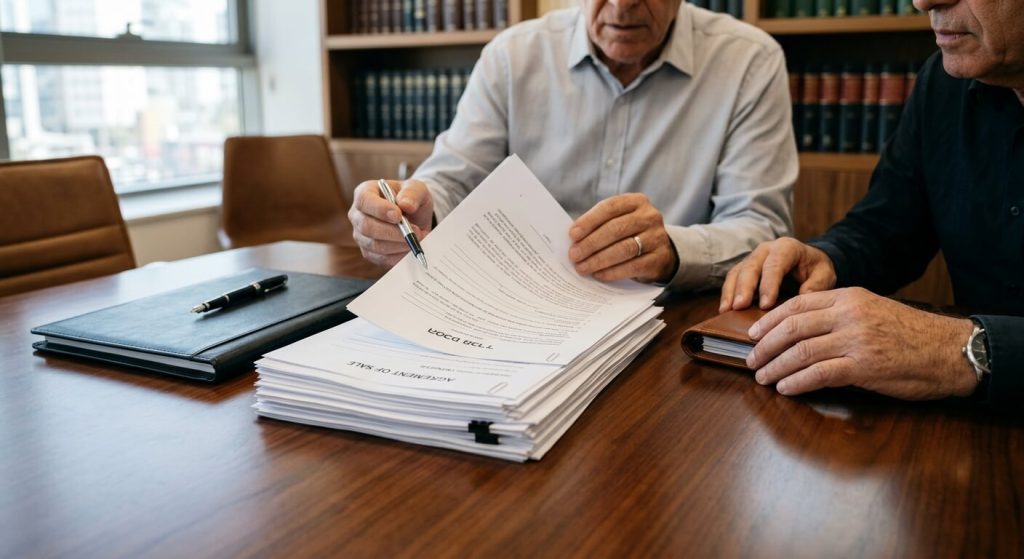
Do I need an attorney in order to write a will?
- Legal framework:
Succession Law, 5725-1965
What types of wills exist?
Handwritten will:
Section 18 of the Succession Law:
It must be written entirely in the testator’s own hand, bear a date written in his own hand
and be signed by him
Witnessed will:
Section 20 of the Succession Law:
- A witnessed will must be in writing
- It must state the date
- It must be signed by the testator in the presence of two witnesses, after he has declared before them that this is his will
- At that same time, the witnesses must confirm by signing on the will that the testator made the declaration and signed as stated
Will before an authority (rabbinical judge (dayan) / judge / Registrar of Inheritance / notary):
For the purposes of this section, we will refer to the authority as a notary.
Section 22 of the Succession Law:
- The contents of the will are stated orally or submitted in writing before the authority (rabbinical judge / judge / Registrar of Inheritance / notary)
- The notary records the testator’s words
- The notary reads the contents of the will aloud
- The testator declares that this is his will, after it has been read to him
- The notary confirms by signing on the will that it was read in the testator’s presence, that the testator declared it to be his will, and that it was read to him
Can I make a will without an attorney or notary?
Yes, as noted above, by making a handwritten will or a witnessed will.
However, this is not recommended at all, because the will may contain details that could invalidate the entire will, or important details may be missed.
- If I have decided to write a will without an attorney or notary, what points should I pay attention to: Write that the apartment will be fully owned by the surviving spouse, or at least require the heirs to allow the spouse to continue living in the apartment for the rest of his or her life.
- Sign every page.
- Sign next to every correction.
- State who does inherit and specify his or her identity; in the absence of a will, the wife and children inherit (and do not settle for stating who will not inherit).
- Attach a medical certificate stating that the testator has not lost his legal capacity, preferably dated as close as possible to the time the will is written.
- The will should be written in the form of a directive.
- Specify the names and identity of the heirs: name and ID number.
- Specify the estate being transferred: real estate, movable property, bank accounts, and also add any property acquired after this will is written.
- Deposit the will with the Registrar of Inheritance – not mandatory, but highly recommended, so that, heaven forbid, the will does not disappear.
- Do not include in the will a condition that is immoral and contrary to public policy; otherwise the heir will receive the estate without the condition having to be fulfilled.
If someone did not write a will, does that mean they have no will?!
No. The law determines how a person’s property is divided after his death.
Why it is important to write a will for the surviving spouse:
Given that the children inherit half of the decedent’s share in his residential apartment, legal claims against the spouse’s continued residence in the apartment must be prevented. The will should explicitly state that the spouse may continue living in the home for the rest of his or her life, and it is preferable to transfer the home to the spouse’s ownership.
Situations in which it is especially important to write a will:
- Married couples with children who want the spouse to continue living in the apartment after the other spouse’s death.
- Couples in second marriages where each spouse has children.
- A single person without children.
- Couples without children.
- A family in which there is a conflict among the children.
- In a religious family – when you want all the children to receive equally (and not only the sons, and not have the firstborn receive double).
- Common-law partners.
- Separated couples.
- Multiple assets and a wish to carry out tax planning.
In light of the above, writing a will involves many important details, the absence of which may undermine its validity. We recommend contacting an attorney or notary, who can write the will in a legally valid manner, will pay attention to the small details, and will prevent, heaven forbid, a dispute among the heirs. We would be happy to assist you with any question.