What Is a Deathbed Will (Shechiv Mera)?
This is a will made under Section 23 of the Succession Law, 5725-1965, which provides that a person who feels that their death is near, in circumstances that justify it, may make an oral will in front of two witnesses (its validity depends on additional conditions, detailed below), even if they never made a will before.
The importance of a deathbed will:
It allows the testator to make a will in a relatively simple way, without the usual formal procedure and without a written document at the time it is given, so it can be done almost at any moment and in almost any situation.
The text of the law:
“Section 23 of the Succession Law, 5725-1965:
(a) A person on his deathbed, and likewise a person who considers himself, in circumstances that justify it, to be facing death, may make an oral will in front of two witnesses who hear him speak.
(b) The words of the testator, stating the day and the circumstances in which the will was made, shall be recorded in a memorandum signed by the two witnesses and deposited by them with the Registrar of Inheritance; recording, signing and depositing as stated shall be done as soon as possible after it can be done.
(c) An oral will becomes void one month after the circumstances that justified making it have passed, if the testator is still alive.”
What conditions must be met for a deathbed will to be valid?
1. The testator must be in a state of “facing death,” meaning that the testator is on their deathbed, or has been caught in a real danger to their life, and feels that they are about to pass away soon.
2. The testator’s words must be spoken in front of two witnesses.
3. The two witnesses must record the testator’s words in a memorandum and sign it, stating the day and the circumstances in which the will was made. The memorandum must be deposited with the Registrar of Inheritance as soon as possible after the will is made.
4. If a month has passed since the will was made, and the circumstances that justified making it have passed, and the testator is still alive, the will is void.
Who Is Considered to Be on Their Deathbed?
A person who feels that their death is near, for example:
- A person hospitalized in critical condition in a hospital.
- A terminally ill patient in advanced stages of an illness.
- A person who has been in an accident or a severe medical emergency with a low chance of survival.
A person does not have to be dying in a hospital to be considered to be on their deathbed; it is enough that it can be understood that this is their condition (252/70 Carola Rosenthal v. Tadeusz Tomaszewski).
The test is a subjective one: did the testator feel that they were about to die.
The Role of the Witnesses in the Will Is Critical:
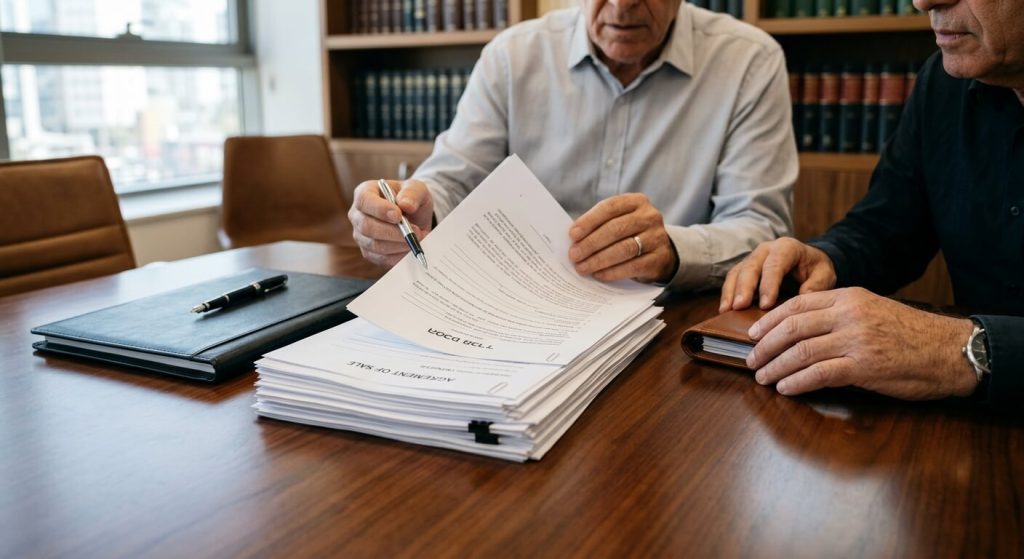
One of the critical elements of a deathbed will is the role of the witnesses. Under the law, the will is made orally in front of two competent witnesses, whose role is:
- To hear the testator’s words clearly – the testator must express their wishes directly, and not through a third party.
- To document the words in writing – the witnesses are required to put the content of the will into a memorandum.
- To deposit the document with the Registrar of Inheritance – the document the witnesses prepared must be deposited with the Registrar of Inheritance as soon as possible after the date the will was made.
Accurate and reliable documentation of the will is essential to ensure that the testator’s wishes are honored, and to prevent future legal disputes.
In What Situations Can a Deathbed Will Be Revoked?
A deathbed will is a unique kind of will, but its validity depends on several conditions:
- Recovery of the testator:
If the testator remains alive one month after making the deathbed will, the will is automatically void.
The assumption is that in this situation, the testator can make a new will or change their wishes according to their needs.
2. Failure to meet the requirements of the law:
If the will was not made in the presence of two competent witnesses, or was not properly documented, or was not submitted to the Registrar of Inheritance, the court may invalidate it.
3. Challenge by the heirs:
Family members or interested parties may claim that the testator was not of sound mind when the will was made, which will lead to close legal scrutiny that may result in its invalidation.Summary:
A deathbed will is an important tool in extreme situations, allowing a person to express their last wishes even in a severe or unexpected medical condition. Despite the flexibility it provides, this is an especially sensitive procedure that requires strict compliance with the requirements of the law. The role of the witnesses, as well as accurate documentation of the testator’s words, are critical to ensuring the will’s validity and preventing legal disputes.