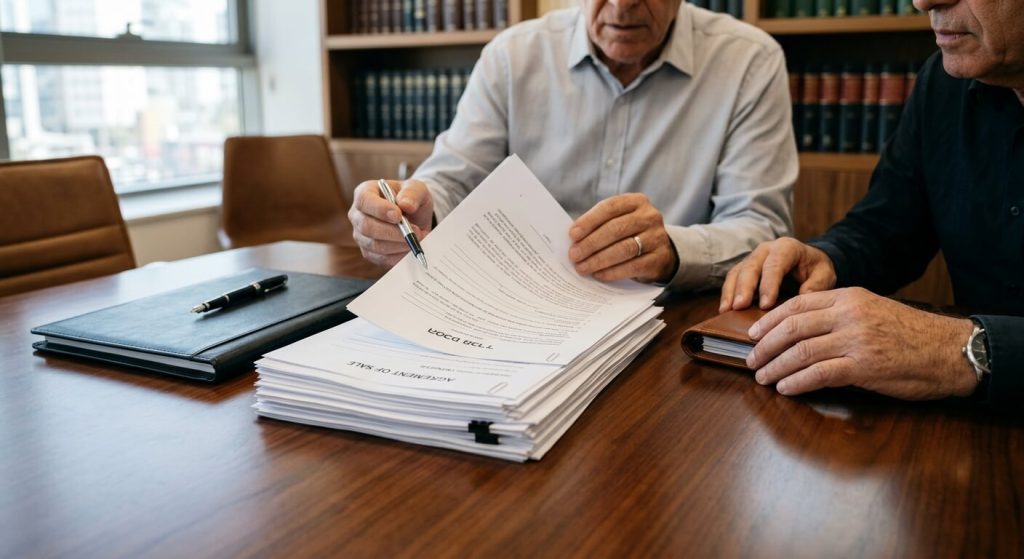
An objection to a will is a legal proceeding in which a person challenges the validity of a will that has been submitted for approval to the court or to the Registrar of Inheritance, claiming that there is some defect, either in the will itself (the content of the will) or in the manner in which it was written (the form of the will), that justifies disqualifying it for failure to meet the requirements of the law, for example: a will written under undue influence or by a testator suffering from insanity.
Where Does the Proceeding to Object to a Will Take Place?
The proceeding to object to a will is usually conducted in the Family Court or in the Rabbinical Court, according to the heirs’ choice.
Who Has the Right to Contest the Will?
Not everyone can file an objection to a will.
Under the Succession Law, anyone who is an heir, either under the will or under the law, has the right to object.
Various situations in which an objection to a will can be filed:
- Heirs by law: relatives who would have been entitled to an inheritance had the deceased not left a will (for example, children, spouses, or parents).
- Heirs under a previous will: if the current will contradicts a previous will in which an inheritance was promised to another person, the previous heir may file an objection.
- Heirs who were harmed: people who were entitled to a larger share of the inheritance under the will, or who claim that the deceased promised them an inheritance on different terms.
What Are the Different Grounds for Objecting to a Will?
The law recognizes several main grounds that can serve as the basis for filing an objection to a will. The following are some of the most common grounds:
- Lack of legal capacity: a claim that the deceased was not competent at the time the will was made. For example, if the deceased suffered from dementia at the time the will was made, it can be argued that the will is not valid.
- Undue influence: another ground is that the will was made under pressure, coercion, threat, or manipulation by a third party who caused the deceased to change the will in a way that does not reflect the deceased’s free will.
- Forged will: if there is evidence that the will was forged or that it was not signed by the deceased, this is a strong ground for objection.
- Formal defects in the will: wills are required to meet formal requirements. For example, if the will was not properly signed, was not executed in the presence of witnesses, or the witnesses themselves were an interested party in the inheritance, it can be argued that the will is invalid.
- A will written under the influence of a mistake: where the will was made on the basis of a mistaken understanding of a certain fact, an objection can be filed.
What Is a Response to an Objection to a Will?
When an objection to a will is filed, the parties who want the will to be given effect have the opportunity to respond and prove its validity. A response to an objection is essentially the defense raised by the beneficiaries designated under the will or by interested parties who support the validity of the will. They may present evidence that the will was made under proper conditions and that the deceased was lucid and competent at the time it was written. Often, this is a complex legal proceeding that includes bringing witnesses, medical documents, and additional evidence.
Deadline for Filing an Objection to a Will
Under the Succession Law, the deadline for filing an objection to a will is up to 14 days from the publication of the application for a probate order. The publication is usually made by the Registrar of Inheritance, in order to allow interested parties to file an objection. If no objection is filed on time, there is a high chance that the will will be approved by the court.
However, in special cases it is possible to file a request to extend the deadline for filing an objection, if there is a justified reason for the delay in filing.
What Defects in a Will Can Invalidate It?
There are two main types of defects that may invalidate a will: formal defects and substantive defects.
Formal defects: Defects related to failure to meet the formal requirements of the law. For example, a handwritten will that was not signed, or an oral will that was not stated before two witnesses. These defects can lead to automatic invalidation of the will in certain cases.
Substantive defects: Defects related to the content of the will or the circumstances in which it was made, such as undue influence, coercion, or a situation in which the deceased lacked the legal capacity to write the will. These defects are considered more serious and require weighty proof in court.
What Is Important to Include in an Objection to a Will?
When filing an objection to a will, it is important to include several essential details in the objection document:
- Full personal details of the filer: name, address, and contact details.
- Proof of connection to the will: the person filing the objection must prove that they have a direct interest in the will, such as a family relationship or prior inheritance rights.
- Grounds for the objection: a precise description of the reasons for objecting to the will, such as claims of a formal defect, undue influence, or lack of capacity.
- Supporting evidence: documents or testimony that back up the claims raised in the objection, such as medical documents, affidavits from witnesses, or expert opinions.
How Does the Process Work?
The process begins with the heirs filing the application for a probate order, followed by a publication by the Registrar of Inheritance announcing the possibility of filing an objection. If an objection is filed, the hearing moves to the Family Court. The parties present their arguments and evidence, and the court decides whether to accept the objection or reject it.
Invalidating a Will – Types of Proceedings
There are two main types of proceedings for invalidating a will:
Filing an objection before the probate order is issued: When an objection to a will is filed before the order has been issued, this is a standard proceeding in which the will and the conditions of its making are examined.
Application to cancel a probate order: If the will has already been approved by a probate order, an application to cancel the order can be filed in cases of a new discovery of a defect or a significant mistake.
Summary
An objection to a will is a complex proceeding that allows interested parties to challenge the validity of a will. There are several main grounds for objection, such as lack of capacity, undue influence, or formal defects. The proceeding requires filing the objection on time and in a professional manner, and includes court hearings to prove the claims. Invalidating a will can be done in several ways, depending on the timing of the objection and the nature of the defects in the will.