A mutual will is an important legal tool designed to serve spouses who wish to secure the well-being of the surviving spouse after the death of one of them, and to protect their joint property. This will is based on the principle of reciprocity and joint agreement between the spouses, and is usually made out of a desire to ensure that the property passes to the surviving spouse, and afterward to the joint heirs.
In this article we will take a closer look at the mutual will, its advantages and disadvantages, and the differences between it and an ordinary will, and we will also discuss important topics such as canceling and changing a mutual will.
What Is a Mutual Will?
This is a will that spouses make jointly, in one document or in two documents, setting out the provisions that will apply after the death of each of them.
It is customary in a mutual will to provide that after the death of one of the spouses, the surviving spouse will inherit from his or her partner. Only after the death of the other spouse will the children inherit the estate.
What Is the Difference Between an Ordinary Will and a Mutual Will?
The main difference between an ordinary will and a mutual will is the mutual dependence in their decisions:
- Ordinary will: A person determines how to distribute his or her property independently, without dependence on any other party.
- Mutual will: Based on the agreement of both parties, so that each of them knows in advance how the property will be distributed and what will be done with his or her property after death.
An ordinary will allows greater flexibility, since it can be changed or revoked at any time, whereas a mutual will requires a more orderly and complex procedure to cancel or change, especially after the death of one of the spouses, as detailed below.
Advantages of a Mutual Will:
- Reciprocity: On the one hand, an advantage of a mutual will is that it embodies the principle of reciprocity: all the provisions of the will bind both parties equally.
- Protection of the surviving spouse from heirs: The surviving spouse is the heir of the deceased spouse for the rest of his or her life, and the heirs will have no claim to the remaining property.
For example, a mutual will can protect the surviving spouse from a situation in which the children inherit half of the parents’ home and demand that the surviving spouse be removed from the apartment, although there is a solution for this as well without a mutual will, as will be detailed later.
This has added significance in a second marriage, where the legal heirs, in addition to the surviving spouse, are the children of the deceased spouse who are not the children of the surviving spouse, which is, as is well known, a more complex reality.
- Securing a joint wish: The document reflects the joint agreement between the spouses and allows planning the distribution of property in accordance with their wishes.
- Preventing family disputes: Advance agreement prevents future disputes between the heirs.
Disadvantages of a Mutual Will:
- Limits on changing the will: Changing a mutual will after the death of one of the spouses is complex and sometimes impossible. This is problematic because real life is constantly changing, and it is unwise to lock into provisions that may be suitable at one moment but later turn out to be unsuited to reality.
- Harm to independence: The spouses cannot change their wishes unilaterally, which may be a disadvantage in situations where personal or family changes occur. For example: if a mutual will provides that a property will pass to an heir after the death of both spouses, and in practice the surviving spouse has changed his or her mind and wants to sell the property during his or her lifetime to a third party.
- Potential for exploitation: The surviving spouse may use the property in a manner that does not accord with the wishes of the deceased spouse.
The statutory provision:
Section 8A of the Succession Law, 5725-1965:
8A. (a) Spouses may make wills in reliance of one spouse on the will of the other spouse; such wills may be made whether the beneficiary under each of the wills is the spouse or a third party, and whether in two documents made at the same time or in one document (in this section – mutual wills).
(b) The cancellation of a mutual will shall have no effect unless one of the following is fulfilled:
(1) During the lifetime of both spouses – the testator who wishes to cancel his will shall deliver written notice of the cancellation of the will to the other testator; where such notice has been delivered, the mutual wills of both testators are void;
(2) After the death of one of the spouses –
(a) As long as the estate has not been distributed – the surviving spouse who wishes to cancel his will shall relinquish, not in his own favor, in favor of his child or in favor of the decedent’s brother, any portion or any share in the estate that he is to receive under the mutual will of the testator who died;
(b) After the estate has been distributed – the surviving spouse who wishes to cancel his will shall return to the estate everything he inherited under the mutual will, and if return in kind is impossible or unreasonable – he shall return the value of the portion or share in the estate that he inherited;
(c) The provisions of subsection (b) shall apply if the mutual wills contain no other provision; however, a provision that completely denies the right to cancel the will during the lifetime of both spouses is void.
Can a Mutual Will Be Canceled?
Canceling a mutual will is possible, but requires meeting certain conditions:
- Both spouses are alive: Each of them can cancel the will unilaterally, as long as he or she notifies the other party in writing. From the moment of such notice, the wills of both spouses are automatically void and the estate will be distributed in accordance with the law. 2. After the death of one of the spouses:
a. Before the estate is distributed: A spouse who wishes to cancel the will must relinquish any share to which he or she is entitled under the mutual will, in favor of a son/daughter or brother/sister of the decedent. b. After the estate is distributed: A spouse who wishes to cancel the will must return to the estate everything he or she inherited under the mutual will. It is preferable to return in kind what was received, and if that is not possible, then its value.
How Is a Mutual Will Made?
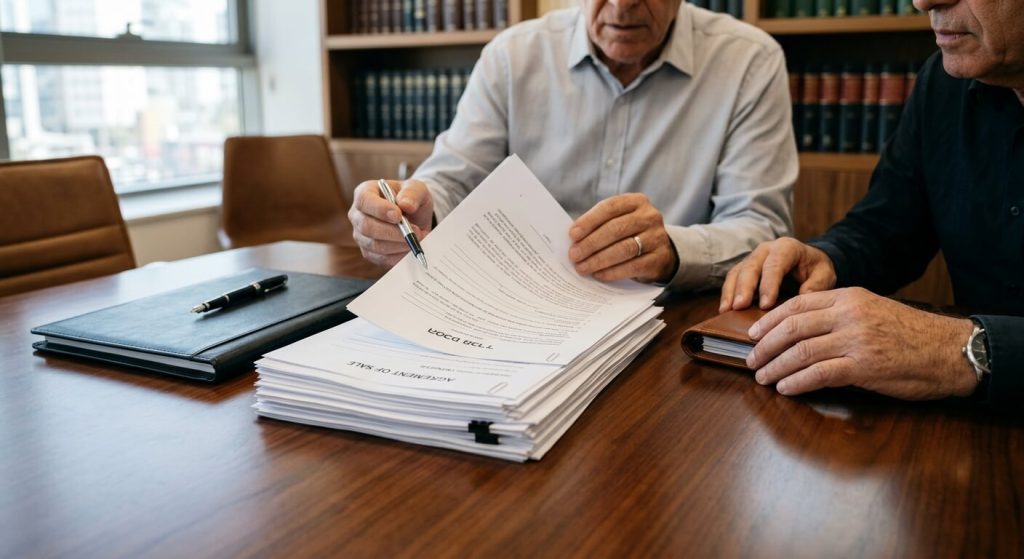
Making a mutual will requires the guidance of an attorney who is an expert in inheritance law, to ensure that all the legal requirements are met. The spouses need to agree together on the principles of property distribution, determine the order of succession, and decide on the conditions for carrying out the will.
Objection to a Mutual Will:
An objection to a mutual will can be filed on grounds such as undue influence, exploitation, coercion, misrepresentation, lack of legal capacity of the testator, etc.
An objection to a mutual will is more complex, and therefore it is worth enlisting the help of an attorney who is an expert and knowledgeable in the field.
Summary:
A mutual will is an effective solution for spouses who want to plan the distribution of their property in a way that will ensure the well-being of the surviving spouse and preserve their joint wishes. However, it is important to understand the legal implications of a mutual will, including the disadvantages and the limitations on canceling and changing it after the death of one of the spouses.
Before making a mutual will, it is recommended to enlist an attorney who is an expert in inheritance law, who will accompany you through the process, ensure that the will meets all legal requirements, and help prevent future disputes among the heirs.