For many people, investing in real estate is seen as relatively safe compared to the capital market. However, a successful apartment purchase as an investment depends on smart risk management. Here is a guide that will put things in order.
Checking the Ground – Is It Worth Buying an Apartment as an Investment?
This question occupies every investor. To answer it, you cannot rely only on gut feelings or on the success stories of acquaintances. The profitability of buying an apartment as an investment is measured by:
- Rental yield compared to the cost of purchasing the property,
- Appreciation potential,
- Financing costs (mortgage interest rates in the economy)
- Betterment levy, Purchase Tax and future taxes.
When examining profitability, it is important to take into account that an investment apartment requires not only equity, but also:
- Periods in which the property may be vacant (tenant turnover, renovation, etc.)
- Ongoing maintenance expenses.
If the net yield after deducting the purchase price and tax payments is higher than the alternatives, this may be the right move.
How Do You Buy an Investment Apartment?
It always starts with setting an exact budget and obtaining preliminary mortgage approval from the bank. The next step is finding the property. It is recommended to look for areas with high rental demand, good public transportation and future development plans such as Pinui Binui (urban renewal) or light rail lines, for example near universities, parks or high-tech centers. Once the property has been found, the stage of the preliminary checks begins.
What Should You Check in the Documents Before Buying an Apartment?
You must carry out a series of preliminary checks in order to prevent expensive surprises later on:
Checking the Land Registry (Tabu) Extract or Rights Confirmation
You should obtain an up-to-date Land Registry (Tabu) extract, a rights confirmation from the management company or from the Israel Land Authority (ILA), and verify that the seller is indeed the registered owner. In addition, it is important to check whether there are any:
- Attachments,
- Liens,
- Unpaid mortgages,
- Debts
- Priority notices (caution notes) in favor of a third party.
Reviewing the Building File and Building Permit at the Local Authority
You must review the building file at the Local Planning and Building Committee to verify that the property was built lawfully in accordance with the building permit. This check is meant to rule out building deviations, and to verify that there are no demolition orders or other legal proceedings against the apartment.
Checking the Condominium Plan and the Condition of the Building
It is important to compare the condominium plan to the actual condition of the property. You must verify that the registered appurtenances, such as parking, storage room, balcony or roof, indeed belong to the apartment by law and are accurately marked. Likewise, reviewing the condominium bylaws lets you know whether there are any special restrictions in the building. In addition, it is recommended to:
- Check how the building committee operates
- Make sure the seller has no open debts
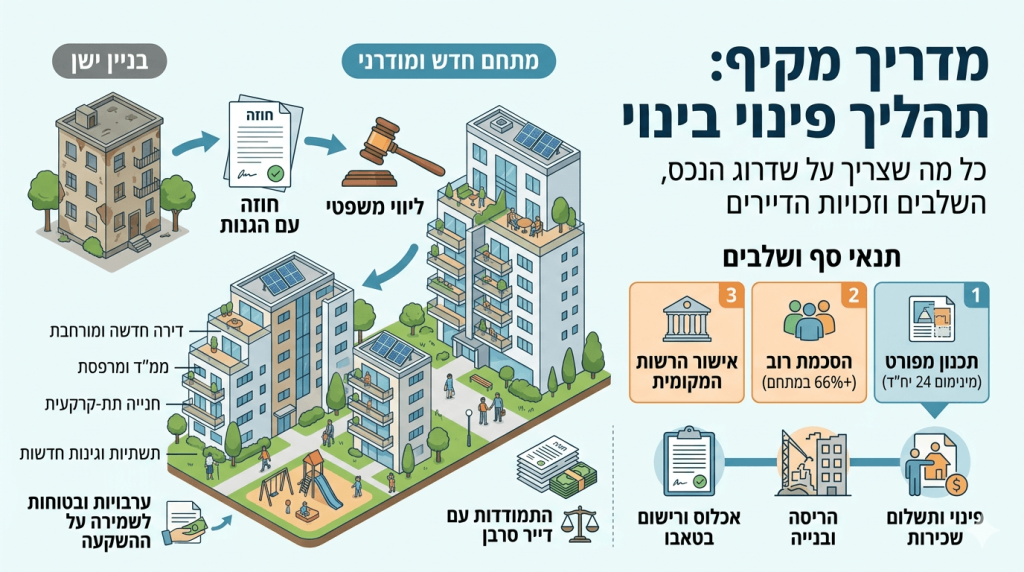
- Find out whether renovations or urban renewal projects are planned in the building (such as TAMA 38 or Pinui Binui)
Why Do You Need an Attorney for Buying an Investment Apartment?
A common mistake among investors is trying to save on the cost of legal representation or settling for the seller’s attorney. Having an attorney for buying an investment apartment who represents your interests alone is a non-negotiable condition, because the attorney will be responsible for:
- Managing the preliminary checks,
- Drafting or carefully reviewing the clauses of the agreement,
- Registering priority notices on time,
- Accompanying the process through to completion of the registration of the property in your name.
What Should You Check Before Buying a Resale Investment Apartment?
Buying a resale apartment has many advantages, because these are usually properties in sought-after areas at accessible prices. However, alongside the advantages there are also challenges:
| What to Check | What Is Important to Check? |
|---|---|
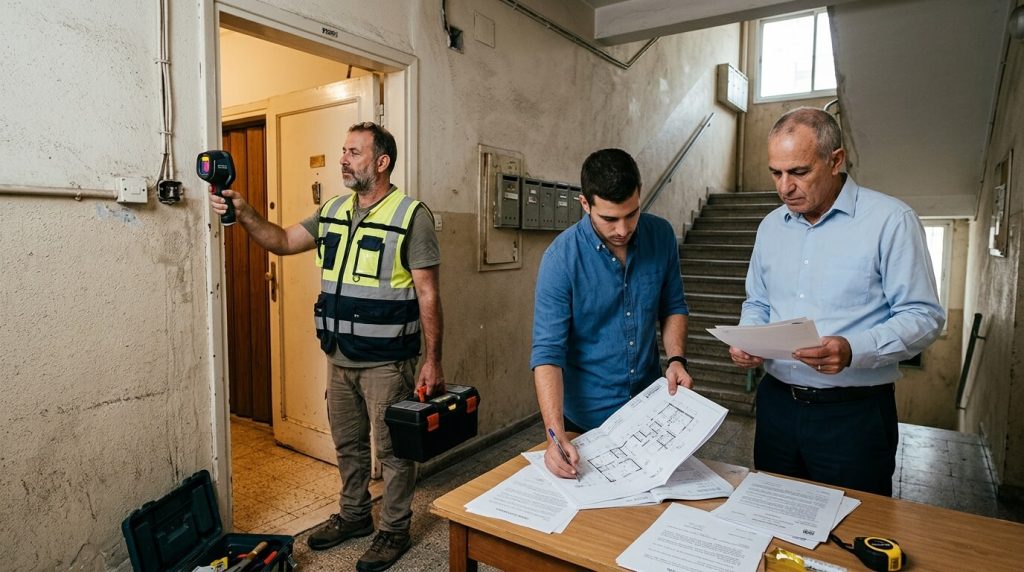
| Physical condition of the property | It is strongly recommended to hire a building engineer or a certified home inspection company to assess whether there are construction defects, hidden dampness or structural problems. |
| Building infrastructure | What is the condition of the elevator, the common roof, the plumbing systems and the parking in the condominium? |
| Financial condition of the building | You should check whether the building committee is functioning, whether residents have debts, and whether extensive renovations or urban renewal projects are planned that will cause additional financial expenses |
When Do You Pay an Attorney for Buying an Investment Apartment?
Generally, the legal fees of an attorney for buying an investment apartment are paid according to the progress of the transaction:
Initial payment:
Part of the legal fees is usually paid when the contract is signed and the first priority notices are registered.
Final payment:
The balance of the legal fees is paid upon completion of the transaction, the actual transfer of the rights into the buyer’s name, and the closing of all the required files with the authorities.
It is recommended to agree on the payment terms and the amount of the legal fees in advance, clearly and transparently.
Summary
Buying an investment apartment is a move that can bear fruit, but it requires a cool head, preliminary checks, and professional guidance all the way.
We would be happy to help with any question
The information presented in this article is for general knowledge only and does not constitute legal advice or a substitute for legal advice.