The promise of a new building with an elevator and modern infrastructure is a dream come true. At the same time, this is one of the most complex transactions that apartment owners will sign during their lifetime. To get through the process safely, the guidance of a TAMA 38 attorney who represents only the residents is absolutely essential.
What Is TAMA 38?
The National Outline Plan 38 has a single purpose – strengthening buildings against earthquakes. Since most residents do not have the required funding, the state created a clever economic mechanism. The residents transfer unused building rights to a developer, and in exchange the developer strengthens the building, renovates it and adds upgrades such as a sun balcony, a safe room (mamad) and an elevator, at no cost to the residents. The plan operates in two tracks:
- TAMA 38/1 (densification and strengthening) – The existing building stays and is only renovated.
- TAMA 38/2 (demolition and rebuilding) – The old building is demolished and a new one is built in its place.
TAMA 38 Residents’ Rights – What Should You Never Compromise On?
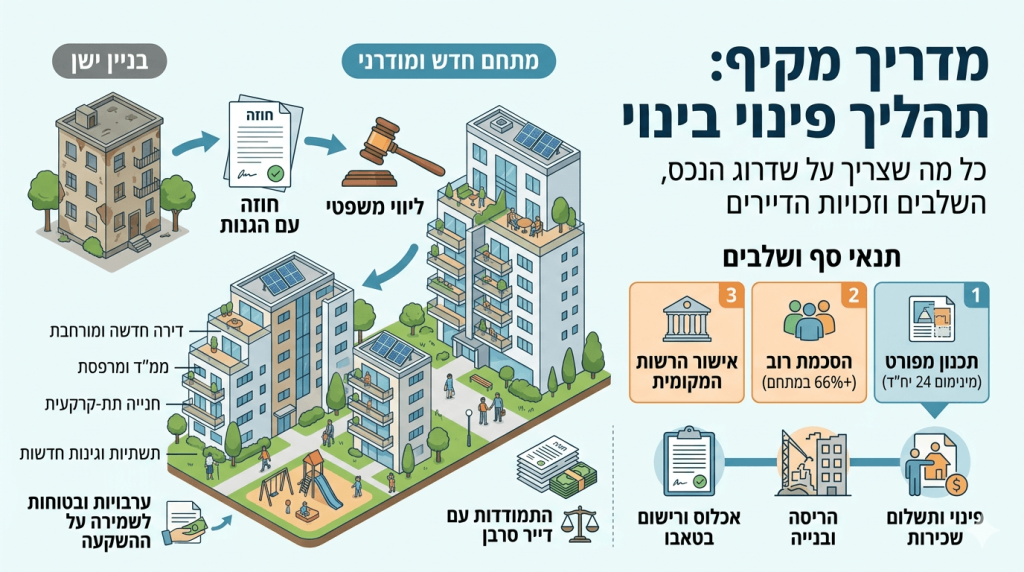
The attorney’s role is to anchor the required security and guarantees in the contract. An agreement with a developer must include:
- Sale Law guarantees, performance and defects-liability (bedek) guarantees, and rent payments during the evacuation period.
- A precise definition of the building additions, the type of flooring, kitchen, aluminum and sanitary fixtures.
- Clear target dates for obtaining the building permit, starting work and handing over the key, together with financial sanctions in the event of delays.
What Is the Difference Between TAMA 38 and Pinui Binui, and How Does It Affect You?
Some people tend to confuse the different tracks of urban renewal. The difference is in the scope of the project and in the planning authority:
TAMA 38, in both of its tracks, is a targeted plan that relates to a single building or to a small number of buildings, under which building permits can be issued by the Local Committee.
Pinui Binui (urban renewal: demolish and rebuild) is a large-scale project of at least 24 existing housing units. Such a project requires approval of a zoning plan (TABA) by the District Committee, and usually involves changing the face of the entire neighborhood, including allocating areas for public buildings, gardens or municipal infrastructure.
A Holdout Resident and Local Sensitivities
Human and planning obstacles often arise on the way to the new apartment, and they require legal skill.
Dealing With a TAMA 38 Holdout Resident
One of the most common challenges in these projects is a holdout resident. The law understands that sometimes refusal stems from extortion or from interests that are not in line with the good of the whole. To prevent individual residents from stalling entire projects, the state reduced the required majority, and today consent of only 66% of the apartment owners is required in the demolition and rebuilding track. Once this majority has been achieved, a residents’ attorney is authorized to file a claim against the holdout resident before the Supervisor of Land Registration. The Supervisor has the authority to approve the project in place of the holdout resident, and even to impose fines for the damage he or she causes to the neighbors.
TAMA 38 in Jerusalem
Additional complexity sometimes arises from the geographic location of the property. Take, for example, TAMA 38 projects in Jerusalem. Beyond the architectural requirements of the Jerusalem Municipality, there are sensitivities surrounding issues such as Shabbat elevators and buildings of preservation value. Only a real estate attorney in Jerusalem who is well acquainted with the planning policy of the city’s Local Committee will know how to ensure that the project does not get stuck in the planning stages.
Selling an Apartment Before TAMA 38: Opportunity or Mistake?
Urban renewal processes take time, and not every property owner has the patience or the ability to wait until construction is finished. On the one hand, once the building enters the TAMA 38 process, the value of the existing apartment already embodies part of the future appreciation, which makes it possible to sell the property at a price above the market price. On the other hand, this is a legal and tax trap:
- The sale contract must define precisely who bears the risks, who signs the TAMA documents, and to whom the rights in the new apartment pass.
- Selling at certain stages of the project may expose the seller to tax liabilities that will offset all of the profit from the transaction.
Guidance from a real estate attorney at this stage will make sure that you do not sign commitments that will entangle you with the developer or with the tax authorities.